Food as Florals: How to Use Fruits and Vegetables in Your Wedding Floral Design
By Elena Iutsis, Founder of Noble & Wild Florals
If you've been scrolling through wedding blogs lately, you've probably noticed something unexpected showing up in floral arrangements: figs nestled among garden roses, artichokes tucked into ceremony arches, lemons threaded through greenery at a reception table.
Fruits and vegetables in wedding floral design have moved from bold editorial experiment to genuine mainstream choice and for good reason. They add texture, depth, color, and a sense of abundance that flowers alone can't always achieve. And when they're chosen thoughtfully, they make a design feel genuinely personal rather than assembled from a template.
Here's how to approach it well.
Start with the style of your wedding
Not every fruit or vegetable works in every wedding. The key is matching the ingredient to the overall aesthetic you're creating.
Tropical or destination weddings are a natural fit for pineapples, limes, mangoes, and passionfruit. These elements add a playful, vibrant energy to centerpieces and welcome arrangements without feeling forced, they're already part of the visual language of those environments.
Rustic or countryside weddings pair beautifully with figs, pears, pomegranates, and quince. These have a warmth and organic quality that complements loose, wildflower-style arrangements and wooden or terracotta vessels. A pomegranate split open among garden roses and trailing greenery is one of the richest-looking combinations in floral design.
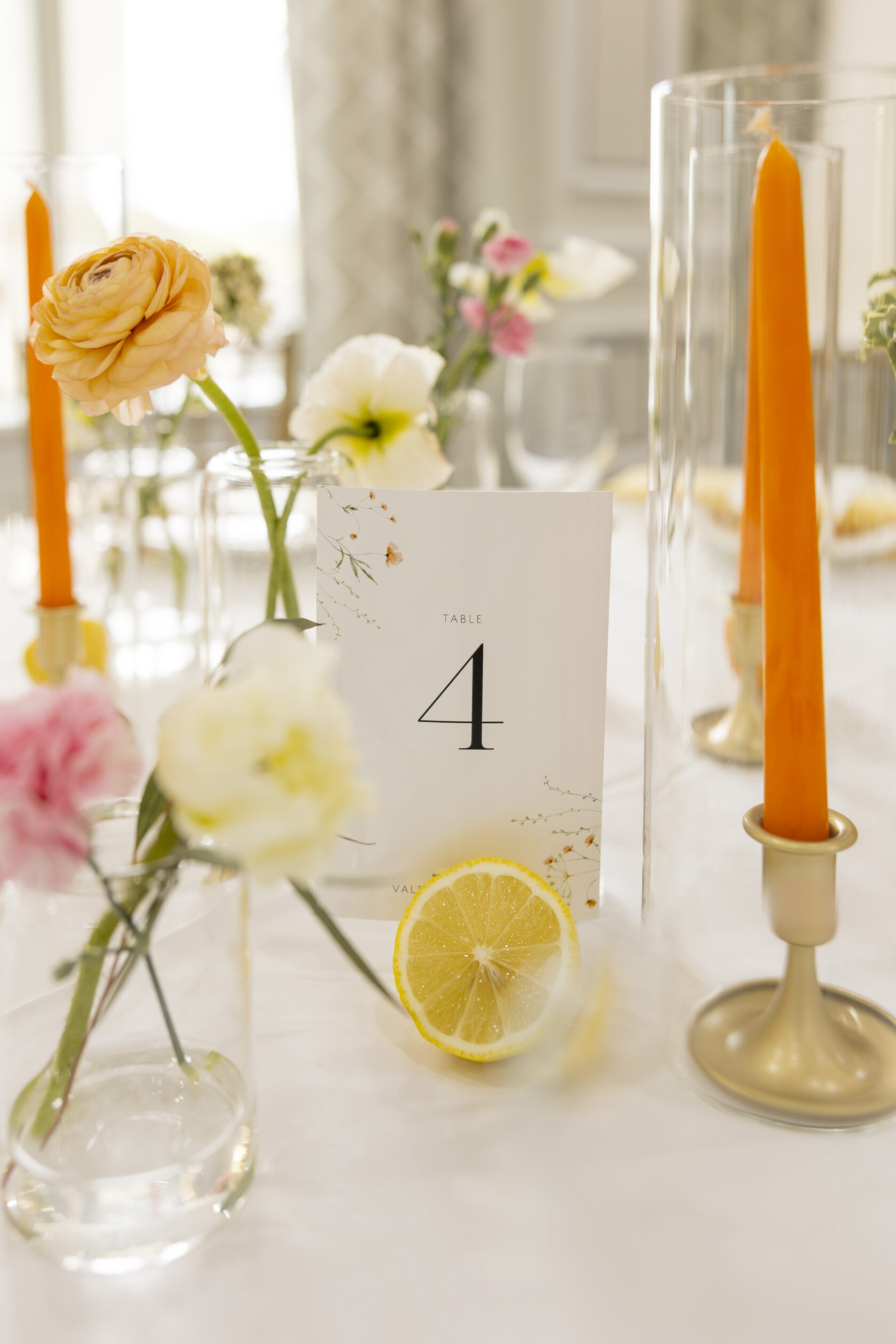
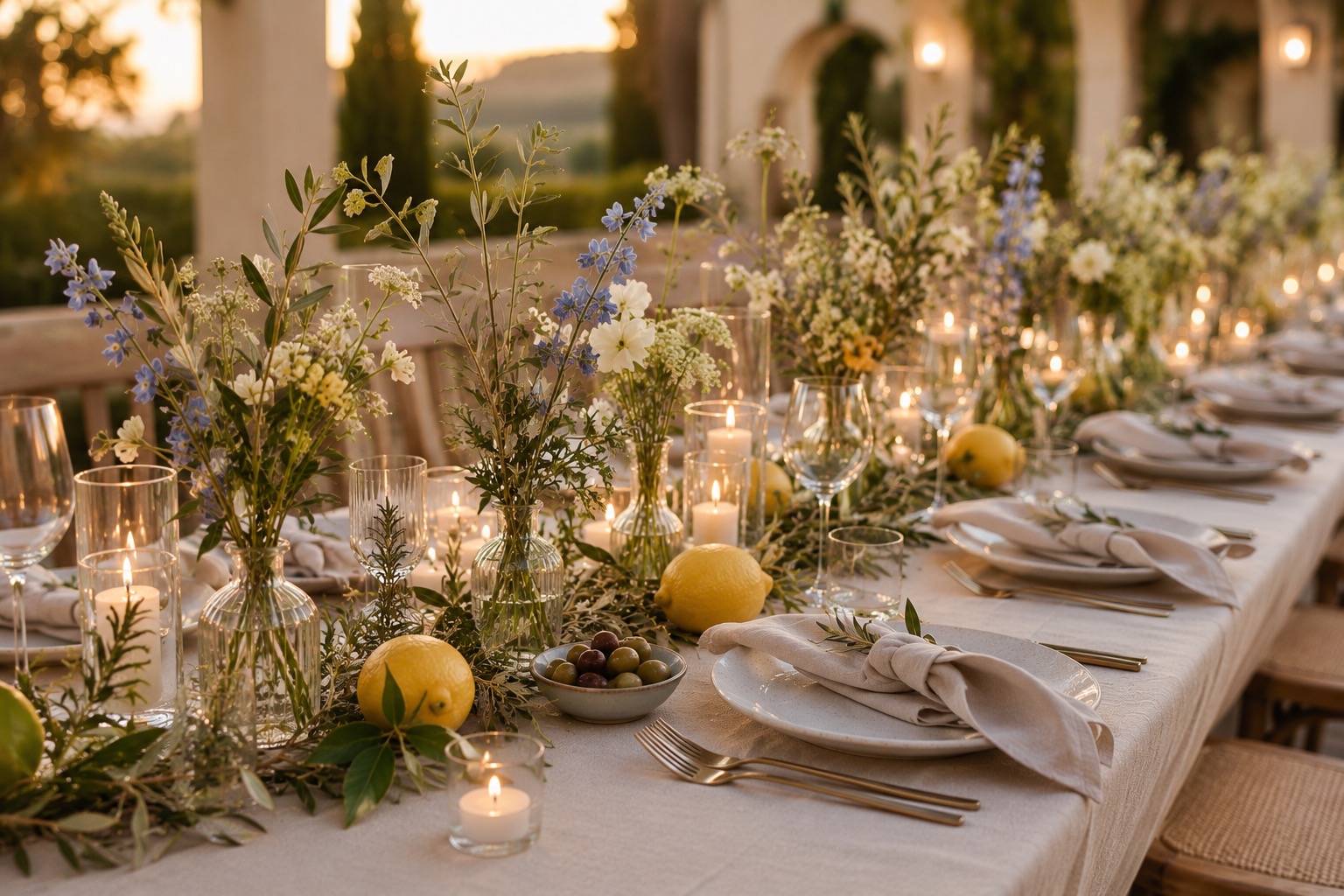
Mediterranean-inspired weddings are increasingly popular at Florida waterfront venues. They work wonderfully with olives, lemons, fresh herbs like rosemary and eucalyptus, and clusters of small citrus fruits. They instantly evoke that relaxed, sun-drenched atmosphere that makes guests feel like they've been transported somewhere beautiful.
Modern or editorial weddings are where the more unexpected choices, artichokes, eggplant, cauliflower, asparagus can really shine. These are the ingredients that stop guests in their tracks, make them look twice, and end up being the detail everyone talks about at the end of the night.
By Elena Iutsis, Founder of Noble & Wild Florals
If you've been scrolling through wedding blogs lately, you've probably noticed something unexpected showing up in floral arrangements: figs nestled among garden roses, artichokes tucked into ceremony arches, lemons threaded through greenery at a reception table.
Fruits and vegetables in wedding floral design have moved from bold editorial experiment to genuine mainstream choice and for good reason. They add texture, depth, color, and a sense of abundance that flowers alone can't always achieve. And when they're chosen thoughtfully, they make a design feel genuinely personal rather than assembled from a template.
Here's how to approach it well.
Start with the style of your wedding
Not every fruit or vegetable works in every wedding. The key is matching the ingredient to the overall aesthetic you're creating.
Tropical or destination weddings are a natural fit for pineapples, limes, mangoes, and passionfruit. These elements add a playful, vibrant energy to centerpieces and welcome arrangements without feeling forced, they're already part of the visual language of those environments.
Rustic or countryside weddings pair beautifully with figs, pears, pomegranates, and quince. These have a warmth and organic quality that complements loose, wildflower-style arrangements and wooden or terracotta vessels. A pomegranate split open among garden roses and trailing greenery is one of the richest-looking combinations in floral design.
Mediterranean-inspired weddings are increasingly popular at Florida waterfront venues. They work wonderfully with olives, lemons, fresh herbs like rosemary and eucalyptus, and clusters of small citrus fruits. They instantly evoke that relaxed, sun-drenched atmosphere that makes guests feel like they've been transported somewhere beautiful.
Modern or editorial weddings are where the more unexpected choices, artichokes, eggplant, cauliflower, asparagus can really shine. These are the ingredients that stop guests in their tracks, make them look twice, and end up being the detail everyone talks about at the end of the night.
Think carefully about your color palette
One of the most practical advantages of incorporating fruits and vegetables into floral design is the extraordinary range of natural color they offer, tones that can be nearly impossible to achieve with flowers alone.
Moody, dramatic palettes, burgundy, wine, deep plum, forest green are transformed by the addition of dark figs, blackberries, black grapes, or deep eggplant. These elements bring a richness and depth that even the most beautiful dark florals sometimes can't match on their own.
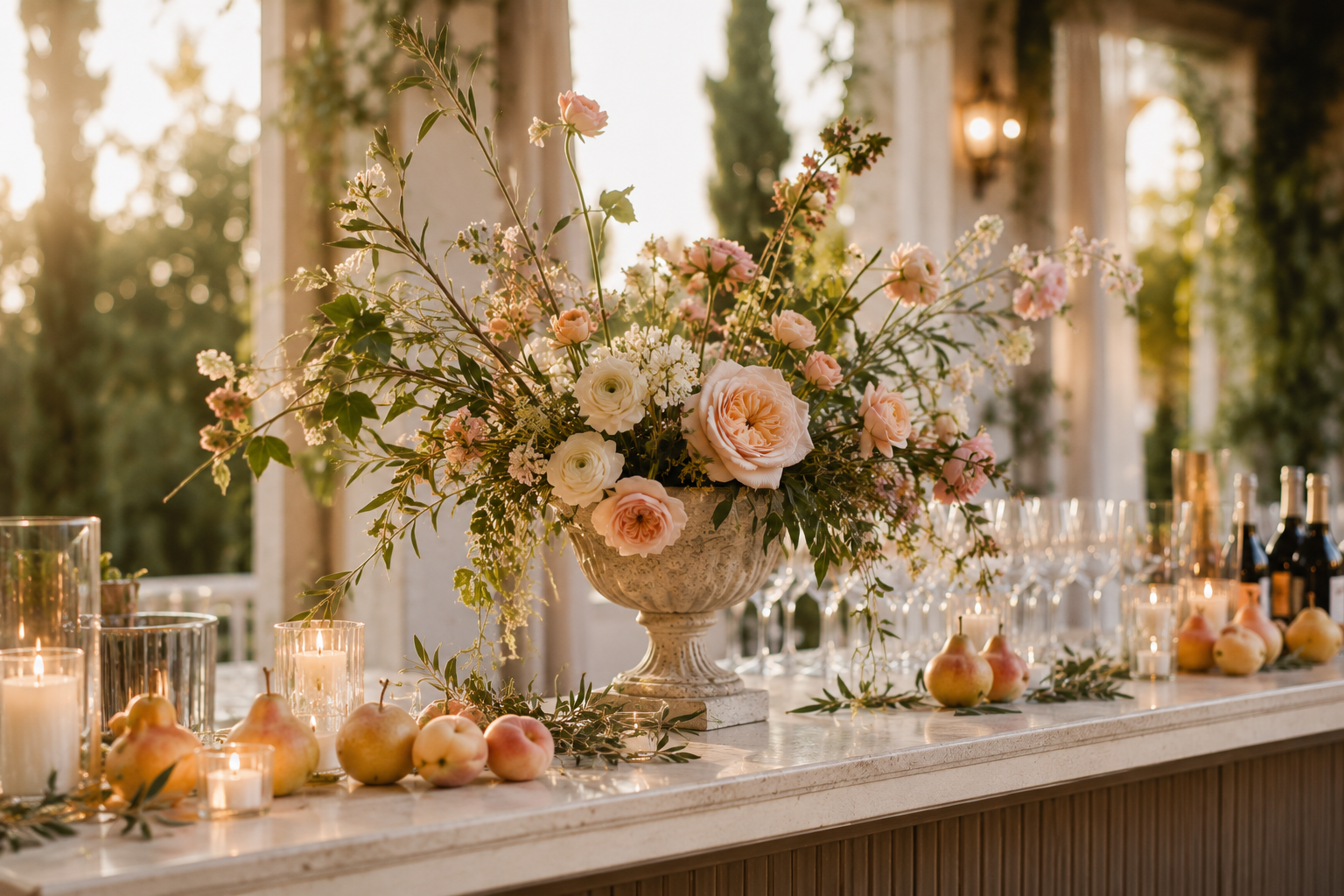
Romantic blush and pastel palettes find a natural partner in soft peaches, pale apricots, and blush-colored pears. These fruits echo the warmth of garden roses and ranunculus without competing with them. They enhance rather than distract.
All-white or neutral palettes might seem like the least obvious fit for produce, but this is actually where the texture argument becomes most compelling. White asparagus, pale artichokes, and cauliflower can be woven into a white floral arrangement almost invisibly. The guest sees something lush and interesting without necessarily identifying what they're looking at. The texture is the point.
One of the most practical advantages of incorporating fruits and vegetables into floral design is the extraordinary range of natural color they offer, tones that can be nearly impossible to achieve with flowers alone.
Moody, dramatic palettes, burgundy, wine, deep plum, forest green are transformed by the addition of dark figs, blackberries, black grapes, or deep eggplant. These elements bring a richness and depth that even the most beautiful dark florals sometimes can't match on their own.
Romantic blush and pastel palettes find a natural partner in soft peaches, pale apricots, and blush-colored pears. These fruits echo the warmth of garden roses and ranunculus without competing with them. They enhance rather than distract.
All-white or neutral palettes might seem like the least obvious fit for produce, but this is actually where the texture argument becomes most compelling. White asparagus, pale artichokes, and cauliflower can be woven into a white floral arrangement almost invisibly. The guest sees something lush and interesting without necessarily identifying what they're looking at. The texture is the point.
The combinations that work best
A few specific pairings worth knowing about:
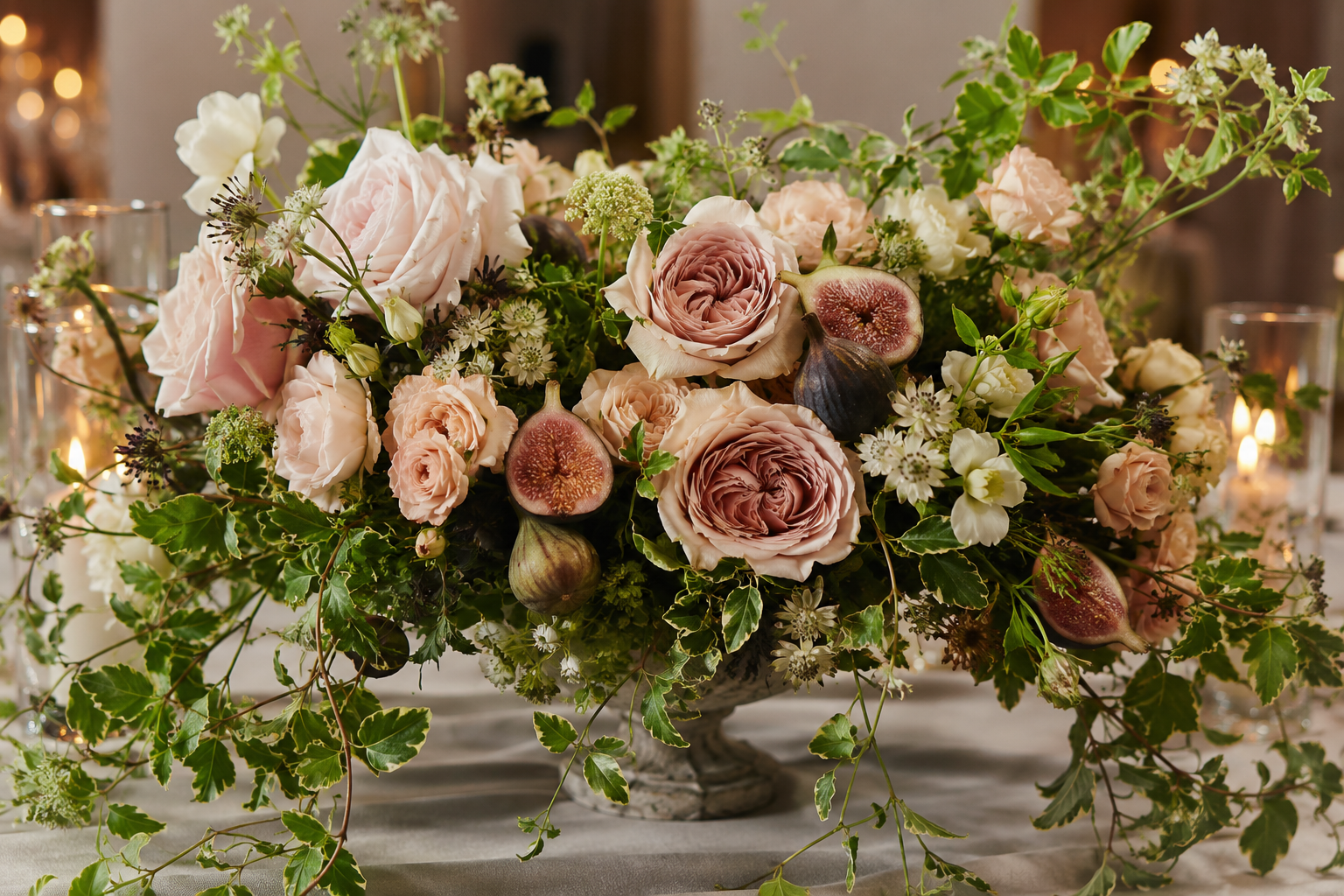
Figs + garden roses + trailing greenery - one of the most classic and beautiful combinations in this genre. The cut fig reveals a deep ruby interior that adds color and visual interest without overwhelming the florals around it.
Lemons + white blooms + fresh herbs - clean, fresh, and endlessly versatile. Works particularly well for daytime or outdoor weddings in Florida's natural light.
Pomegranates + burgundy florals + olive branches - deeply romantic, almost Old World in feeling. Beautiful for candlelit receptions and moody evening events.
Pineapples + tropical foliage + bold florals - a statement rather than a subtle touch, best used intentionally in a venue that can hold the energy.
Artichokes + blush roses + eucalyptus - an unexpected combination that reads as sophisticated and textural rather than quirky. One of the most asked-about arrangements we've created.
A few specific pairings worth knowing about:
Figs + garden roses + trailing greenery - one of the most classic and beautiful combinations in this genre. The cut fig reveals a deep ruby interior that adds color and visual interest without overwhelming the florals around it.
Lemons + white blooms + fresh herbs - clean, fresh, and endlessly versatile. Works particularly well for daytime or outdoor weddings in Florida's natural light.
Pomegranates + burgundy florals + olive branches - deeply romantic, almost Old World in feeling. Beautiful for candlelit receptions and moody evening events.
Pineapples + tropical foliage + bold florals - a statement rather than a subtle touch, best used intentionally in a venue that can hold the energy.
Artichokes + blush roses + eucalyptus - an unexpected combination that reads as sophisticated and textural rather than quirky. One of the most asked-about arrangements we've created.
Don't be afraid to experiment
This is the part most couples hesitate on and it's worth pushing through that hesitation.
Some of the most striking floral designs come from the combination of traditional blooms with something completely unexpected. The artichoke that seemed strange in a florist's description becomes the detail that makes the centerpiece impossible to forget. The split fig that felt risky in the proposal becomes the photograph that ends up framed.
When produce is thoughtfully integrated, chosen for the right aesthetic, in the right color story, in the right proportion, it doesn't compete with the florals. It completes them. It adds richness, movement, and a sense of abundance that feels both deeply modern and somehow timeless.
The most important thing, as always, is that the design reflects the couple. A lemon-and-herb centerpiece means something different at a Mediterranean wedding in Palm Beach than it does at a rustic farm wedding in Central Florida. Context matters. Personal meaning matters.
The details that feel true to you are always the ones that make a wedding genuinely unforgettable.
Noble & Wild Florals is based in West Palm Beach and designs wedding florals throughout Florida — Miami, Fort Lauderdale, Palm Beach, Orlando, Tampa, Jacksonville, and beyond. If you're curious about incorporating unexpected elements into your wedding design, we'd love to talk. Schedule a free consultation →
Related reading:
This is the part most couples hesitate on and it's worth pushing through that hesitation.
Some of the most striking floral designs come from the combination of traditional blooms with something completely unexpected. The artichoke that seemed strange in a florist's description becomes the detail that makes the centerpiece impossible to forget. The split fig that felt risky in the proposal becomes the photograph that ends up framed.
When produce is thoughtfully integrated, chosen for the right aesthetic, in the right color story, in the right proportion, it doesn't compete with the florals. It completes them. It adds richness, movement, and a sense of abundance that feels both deeply modern and somehow timeless.
The most important thing, as always, is that the design reflects the couple. A lemon-and-herb centerpiece means something different at a Mediterranean wedding in Palm Beach than it does at a rustic farm wedding in Central Florida. Context matters. Personal meaning matters.
The details that feel true to you are always the ones that make a wedding genuinely unforgettable.
Noble & Wild Florals is based in West Palm Beach and designs wedding florals throughout Florida — Miami, Fort Lauderdale, Palm Beach, Orlando, Tampa, Jacksonville, and beyond. If you're curious about incorporating unexpected elements into your wedding design, we'd love to talk. Schedule a free consultation →
Related reading:
